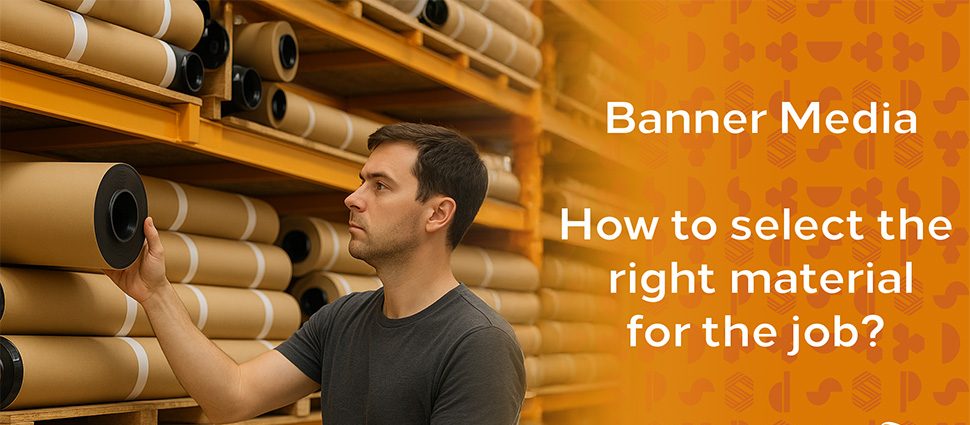
In Soyang’s latest blog, Gareth Newman, Technical Applications Manager, explores the pros and cons of various banner material types.
A staple part of production for many print service providers and signage companies, banners offer an effective route to revenue across various markets. However, those familiar with this work will be well aware that it is not quite as simple as popping your ‘usual’ roll of banner media onto the printer and pressing ‘start’.
The reality is that not all banner materials are created equal. Whether you are producing short-term promotional graphics or long-term outdoor installations, your choice of media will impact everything from image quality and lifespan to tear resistance and cost per square metre.
So, how do you know which way to turn? There’s coated, laminated, scrim and ripstop to consider, but what is the best way of going about identifying the most effective solution for the job in hand? Here are a few pointers to assist you in your quest for the right material…
Lightweight, budget-friendly and ideal for short run work, laminated banner materials are created by sandwiching polyester scrim between two pre-made PVC films, bonded with heat and pressure. This process is faster and more economical, but results in less bonding than coated alternatives, so keep this in mind when selecting your material.
Key benefits:
- Lightweight and easy to handle
- Most cost-effective option
- Sharp white print surface
Semi-coated banner
Semi-coated materials are mid-weight, highly cost-effective and offer more durability than laminated options. They use reduced PVC coverage on the scrim, either on one side or on thinner layers on both sides, thus balancing cost, weight and print surface without full saturation.
Key benefits:
- Lighter than fully knife-coated
- Improved handling and flexibility
- Ideal for medium-term graphics
- Stronger than laminated materials in edge resistance